What Every Traveler Needs to Know: Decoding the Acronyms That Control Your Airport Security Experience
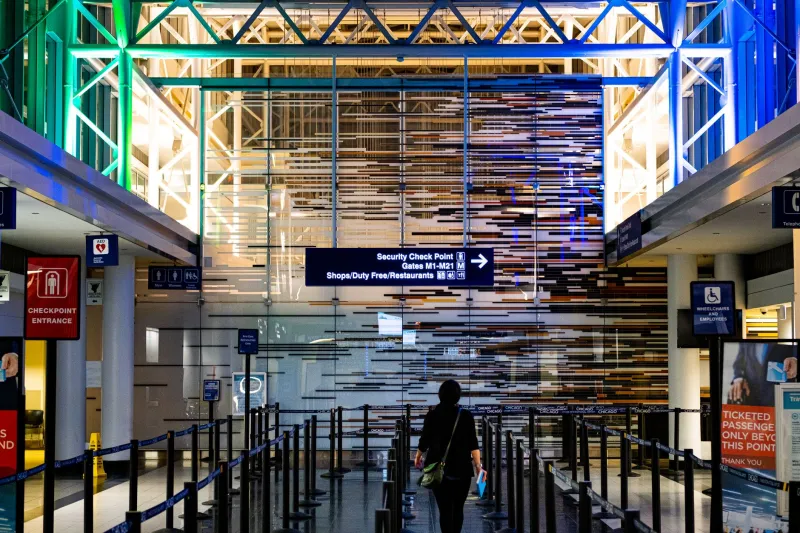
Anyone who has stood in a slow-moving security line at a major U.S. airport has encountered a system built almost entirely on abbreviations. From the signs overhead to the stamps on your boarding pass, airport security speaks a language of its own. For the uninitiated, these letters can seem arbitrary. In practice, they carry enormous consequences — determining how long your screening takes, whether your luggage is flagged, and in some cases, whether you board your flight at all.
This reference guide breaks down the most consequential acronyms you are likely to encounter at a U.S. airport security checkpoint, explaining what each one means, which agency controls it, and why it matters to you as a traveler.
TSA: The Agency Behind the Checkpoint
TSA stands for the Transportation Security Administration, the federal agency created in the aftermath of the September 11 attacks and established under the Aviation and Transportation Security Act of 2001. TSA operates under the DHS — the Department of Homeland Security — and is responsible for screening passengers and baggage at more than 400 U.S. airports.
Every acronym discussed in this article ultimately traces back to TSA's authority. Understanding that TSA is a federal law enforcement agency — not merely an airport service — helps explain why its terminology carries legal and procedural weight rather than serving as simple shorthand.
TSA PreCheck: The Abbreviation Worth Paying For
TSA PreCheck is the agency's trusted traveler program, allowing pre-approved, low-risk passengers to use expedited screening lanes. Members of TSA PreCheck do not need to remove shoes, laptops, liquids, belts, or light jackets during screening — a significant time-saver at busy airports.
Eligibility requires a background check, an in-person appointment, and a fee (currently $78 for a five-year membership). Once approved, a KTN — or Known Traveler Number — is assigned to the traveler. This nine-digit number must be entered when booking flights to ensure the TSA PreCheck indicator appears on a boarding pass.
If you have enrolled in TSA PreCheck but do not see the designation on your boarding pass, the most common cause is a missing or incorrectly entered KTN in your reservation.
CLEAR: A Private Sector Acronym in a Federal Environment
CLEAR is not a government program, though it operates inside federally regulated airports. It stands for nothing — it is technically a proper name, not an acronym — but it is frequently mistaken for one given its all-caps presentation. CLEAR is a private biometric identity verification service that uses fingerprints and iris scans to confirm a traveler's identity, allowing members to bypass the standard ID-check queue.
CLEAR does not replace TSA screening. It addresses only the identity verification stage of the checkpoint process. Many frequent travelers use both CLEAR and TSA PreCheck in combination: CLEAR to skip the document check line, and TSA PreCheck to move through the physical screening lane more quickly.
Global Entry and the CBP Connection
CBP stands for Customs and Border Protection, the federal agency responsible for regulating international travel into the United States. While CBP and TSA are separate agencies, their programs intersect in meaningful ways for travelers.
Global Entry is a CBP-administered trusted traveler program that allows pre-approved international travelers to use automated kiosks upon arriving in the U.S., bypassing the standard customs inspection line. Crucially, Global Entry membership automatically includes TSA PreCheck benefits — making it a preferred option for frequent international travelers despite its slightly higher application fee.
Other CBP-managed programs that share TSA PreCheck eligibility include NEXUS (designed for travel between the U.S. and Canada) and SENTRI (focused on land border crossings between the U.S. and Mexico). If you hold membership in any of these programs, your KTN functions identically to one issued directly through TSA PreCheck enrollment.
SSSS: The Four Letters No Traveler Wants to See
Of all the acronyms encountered at airport security, SSSS is arguably the most consequential — and the least understood. It stands for Secondary Security Screening Selection, and its appearance on a boarding pass signals that a passenger has been flagged for enhanced screening procedures.
Passengers selected for SSSS will typically undergo a full pat-down, an extensive baggage search, and testing for explosive residue using swabs applied to hands, luggage, and personal items. The process can add 30 to 60 minutes to the checkpoint experience and is conducted in a designated secondary screening area.
SSS selection can occur for several reasons. Some travelers are flagged algorithmically by the ATS — the Automated Targeting System — a CBP database that cross-references reservation data, travel history, and watchlist information. Others are selected randomly. One-way tickets purchased close to departure, travel from certain international origins, or inconsistencies in reservation data can all increase the likelihood of SSSS designation.
If you receive SSSS on your boarding pass, arrive at the airport with additional time. The designation cannot be removed at the checkpoint, though travelers who believe they are repeatedly and incorrectly flagged may apply for redress through the DHS TRIP program — the Traveler Redress Inquiry Program — which investigates and, where appropriate, corrects watchlist errors.
AIT and MMW: The Technology Behind the Scanner
The body scanners now standard at most U.S. airport checkpoints operate using one of two technologies, each with its own abbreviation. AIT — Advanced Imaging Technology — is the broad category name TSA uses for these devices. Most modern units specifically employ MMW technology, or Millimeter Wave imaging, which uses non-ionizing radio waves to detect anomalies beneath clothing without producing a detailed physical image of the body.
Earlier AIT scanners used X-ray backscatter technology, which generated more detailed images and was phased out of U.S. airports by 2013 following privacy concerns. Current MMW scanners display only a generic avatar with highlighted areas of interest, which are then investigated through physical pat-down.
ETD: The Swab Test Explained
ETD stands for Explosive Trace Detection, the process by which TSA officers swab surfaces — hands, luggage handles, laptop keyboards — and analyze the collected samples for trace amounts of explosive compounds. ETD machines can detect substances in quantities measured in nanograms.
Passengers selected for ETD testing are not necessarily suspected of wrongdoing. The procedure is used routinely for secondary screening, for travelers who decline AIT scanning, and for random additional checks. Common substances found in everyday environments — certain fertilizers, medications, and even hand lotions — can occasionally produce a positive reading, triggering further investigation.
Navigating the Acronyms With Confidence
Airport security is, at its core, a risk-assessment system expressed through official abbreviations. Each acronym represents a specific protocol, program, or technology designed to evaluate and manage the movement of millions of travelers. When passengers understand what these terms mean, they are better positioned to prepare appropriately, respond calmly during screening, and exercise their rights when necessary.
Enrolling in TSA PreCheck or Global Entry, entering your KTN correctly on every reservation, and arriving with sufficient time if SSSS appears on your boarding pass are all practical steps informed directly by understanding the language of airport security. In a system this consequential, literacy in its terminology is not a minor convenience — it is a meaningful advantage.