What Your Dashboard Is Actually Saying: A Driver's Guide to Automotive Acronyms and Warning Codes
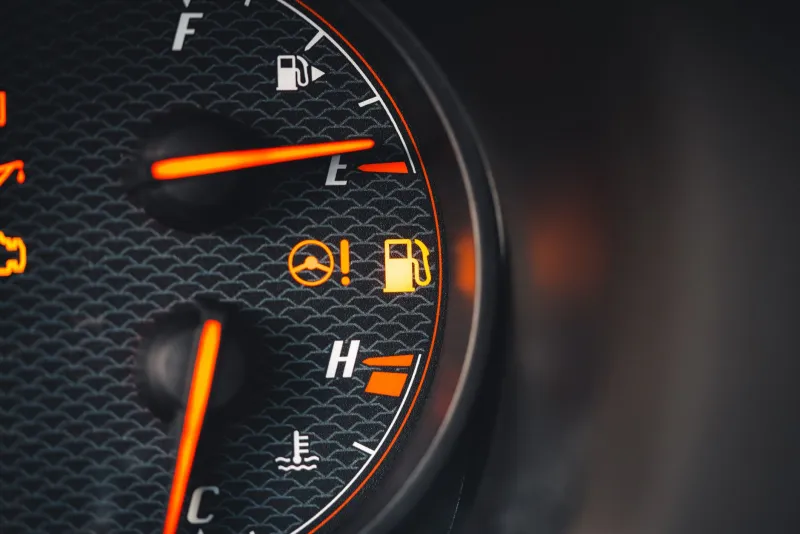
Every morning, millions of Americans climb into their vehicles, glance at a dashboard glowing with symbols and abbreviated codes, and proceed to ignore everything they cannot immediately identify. This is not a criticism — it is a cultural reality. The automotive industry has developed an extraordinarily dense vocabulary of acronyms and abbreviations over the past four decades, and dealerships have rarely prioritized teaching that vocabulary to the people who need it most: everyday drivers.
The consequences of this literacy gap are measurable. According to automotive service industry data, a significant portion of major engine and system failures that reach repair shops each year began as ignored warning indicators — lights that flickered on weeks or months before the vehicle stopped functioning. The acronyms on your dashboard are not decorative. They are a structured communication system, and learning to read them is one of the most practical skills a driver can acquire.
The Alphabet Beneath the Hood: Why Automotive Acronyms Exist
Modern vehicles are extraordinarily complex machines. A contemporary sedan contains more lines of software code than the Apollo spacecraft, and dozens of onboard sensors monitor everything from brake fluid pressure to exhaust particulate levels in real time. Communicating the status of all these systems to a driver — without overwhelming them — requires compression. Acronyms are that compression.
The Society of Automotive Engineers (SAE) and the International Organization for Standardization (ISO) have worked together for decades to standardize many of these abbreviations, particularly for On-Board Diagnostics (OBD) systems. The OBD standard, now in its second generation as OBD-II, requires all vehicles sold in the United States after 1996 to use a universal set of diagnostic codes. This means the acronyms you encounter are not arbitrary — they follow a regulated framework.
Critical Safety Acronyms Every Driver Should Know
ABS — Anti-Lock Braking System
The ABS warning light is among the most frequently misunderstood indicators on American dashboards. Anti-Lock Braking System technology prevents wheel lockup during hard braking, allowing the driver to maintain steering control in emergency stops. When the ABS light illuminates, it does not necessarily mean your standard brakes have failed — it means the anti-lock function is compromised. Driving without ABS is legal but significantly more dangerous, particularly on wet or icy roads. This is a warning that warrants prompt professional attention.
TPMS — Tire Pressure Monitoring System
Mandated by federal law in all passenger vehicles manufactured after September 2007, the Tire Pressure Monitoring System continuously tracks the air pressure in each tire. When the TPMS light appears — typically resembling a cross-section of a tire with an exclamation mark — one or more tires have dropped below the recommended pressure threshold. Underinflated tires reduce fuel efficiency, accelerate tread wear, and increase the risk of blowouts at highway speeds. The fix is often as simple as visiting a gas station air pump, making this one of the most actionable warnings on the dashboard.
SRS — Supplemental Restraint System
The SRS acronym refers to your vehicle's airbag network and its associated sensors and deployment mechanisms. The word "supplemental" is significant: airbags are designed to work in conjunction with seatbelts, not replace them. An illuminated SRS warning light indicates a fault somewhere within this system, which could mean airbags fail to deploy in a collision — or, in rare cases, deploy unexpectedly. This warning should never be dismissed.
EPS — Electric Power Steering
As hydraulic power steering systems have given way to electric alternatives in most modern vehicles, the EPS warning light has become increasingly common. When this indicator activates, steering assistance may be reduced or absent, requiring significantly more physical effort to turn the wheel. At low speeds, particularly during parking maneuvers, this can be genuinely challenging. At highway speeds, it becomes a safety concern.
Emissions and Engine System Acronyms
DPF — Diesel Particulate Filter
Primarily relevant to diesel vehicle owners, the DPF warning indicates that the Diesel Particulate Filter — a component that captures soot from exhaust gases — has become blocked or is approaching saturation. DPF systems are designed to self-clean through a process called regeneration, which requires sustained highway driving at moderate speeds. Frequent short trips in urban environments can prevent regeneration from completing, leading to filter blockage. Ignoring a DPF warning can result in filter replacement costs that routinely exceed one thousand dollars.
EGR — Exhaust Gas Recirculation
The EGR system routes a portion of exhaust gases back into the engine's intake manifold to reduce combustion temperatures and lower nitrogen oxide emissions. EGR valves are prone to carbon buildup over time, particularly in vehicles that see predominantly city driving. A fault in this system can trigger the Check Engine light and, if left unaddressed, reduce fuel economy and engine performance.
CEL / MIL — Check Engine Light / Malfunction Indicator Lamp
These two acronyms refer to the same warning — the ubiquitous amber engine symbol that has caused more collective automotive anxiety than any other dashboard indicator. The Check Engine Light (CEL), formally designated as the Malfunction Indicator Lamp (MIL) under OBD-II standards, can represent anything from a loose gas cap to a failing catalytic converter. The light itself communicates urgency through behavior: a steady CEL typically indicates a non-emergency fault, while a flashing CEL signals an active misfire that can cause rapid catalytic converter damage. When the CEL flashes, reduce speed and seek service immediately.
Understanding OBD-II Diagnostic Trouble Codes
Beyond the dashboard symbols themselves, vehicles store specific fault information as Diagnostic Trouble Codes (DTCs) within the OBD-II system. These codes follow a standardized alphanumeric format. The first character identifies the system: P for Powertrain, B for Body, C for Chassis, and U for Network communication. The second character distinguishes between generic codes (0) shared across all manufacturers and manufacturer-specific codes (1).
For example, a code reading P0420 indicates a generic powertrain fault related to catalyst system efficiency below threshold on Bank 1 — typically pointing to a deteriorating catalytic converter. A code beginning with P1 would indicate a manufacturer-specific powertrain fault, the interpretation of which may vary between brands.
Affordable OBD-II readers are widely available at automotive retailers and online marketplaces, allowing drivers to retrieve and research their own codes before visiting a mechanic. This basic knowledge can prevent unnecessary service charges and help drivers make more informed decisions.
Building Automotive Literacy as a Life Skill
The acronyms on your dashboard represent a standardized, internationally regulated communication system that your vehicle uses to protect both you and itself. Treating these abbreviations as unintelligible jargon — the way many drivers do — is equivalent to receiving a detailed letter and choosing not to read it.
The good news is that automotive acronym literacy is entirely accessible. Owner's manuals decode every symbol specific to your vehicle. The OBD-II standard means that thousands of codes are catalogued in freely available online databases. And understanding even a handful of the most critical abbreviations — ABS, TPMS, SRS, CEL — places any driver in a substantially stronger position than the majority of people currently on American roads.
Your car has been trying to talk to you. It turns out the conversation is worth having.