What Your Pharmacy Receipt Is Actually Telling You: Decoding the Abbreviations Between You and Your Medication
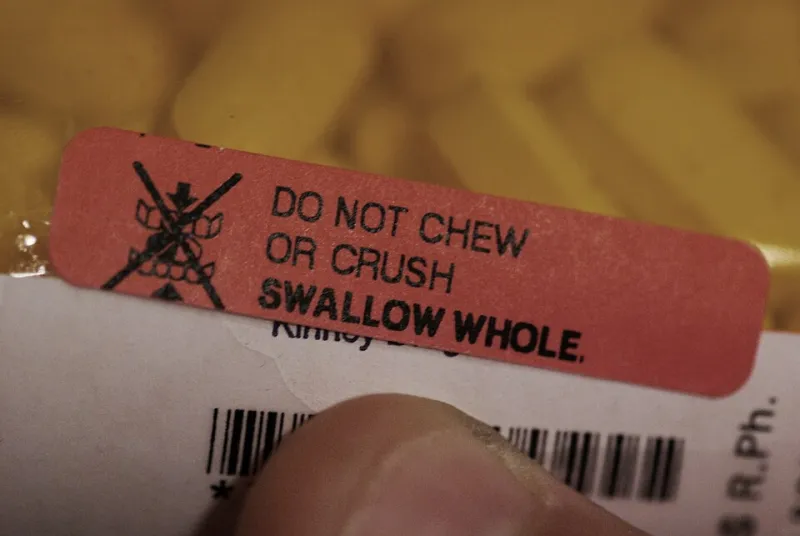
Photo: Ano Lobb, CC BY 2.0, via Wikimedia Commons
Most Americans pick up a prescription, glance at the label, and focus on two things: how many pills are inside and how often to take them. Everything else—the dense cluster of abbreviations, numeric codes, and Latin-derived shorthand printed in small type—gets quietly ignored. That habit carries real consequences. Pharmacy labels and receipts contain a compressed vocabulary that, once decoded, reveals critical information about your medication, your insurance coverage, and your rights as a patient.
Full Form Collection exists precisely because acronyms and abbreviations appear in nearly every corner of professional and daily life. The pharmacy counter is one of the most consequential corners of all.
Why Pharmacies Still Speak Latin
The abbreviations on prescription labels trace their roots directly to medieval Latin, the universal language of European medicine for centuries. When physicians began standardizing written prescriptions, Latin served as a neutral, cross-border shorthand. That tradition persisted long after Latin left the classroom, and many of those original contractions survive on your label today.
Some of the most common examples include:
- QD — quaque die, meaning once daily
- BID — bis in die, meaning twice daily
- TID — ter in die, meaning three times daily
- QID — quater in die, meaning four times daily
- PRN — pro re nata, meaning as needed
- AC — ante cibum, meaning before meals
- PC — post cibum, meaning after meals
- HS — hora somni, meaning at bedtime
- PO — per os, meaning by mouth
- SL — sub lingua, meaning under the tongue
These are not decorative relics. They are active instructions. Confusing QD (once daily) with QID (four times daily) represents a fourfold dosing error—the kind of mistake that sends patients to emergency rooms. The Institute for Safe Medication Practices has long flagged several Latin abbreviations as dangerous precisely because of how easily they are misread. QD, for instance, is frequently misinterpreted as QID when handwritten. Many health systems have moved toward spelling out instructions in plain English, but printed labels at retail pharmacies still carry these codes regularly.
The Drug Classification Codes You Walk Past Every Day
Beyond dosage instructions, prescription labels carry abbreviations that identify what category of drug you have been dispensed. These classifications have legal and practical significance.
DEA Schedule Codes appear on controlled substance prescriptions and receipts. The Drug Enforcement Administration (DEA) assigns substances to schedules based on their potential for abuse and accepted medical use:
- Schedule II (C-II) — High potential for abuse; includes opioids such as oxycodone and stimulants such as Adderall
- Schedule III (C-III) — Moderate potential; includes certain combination opioid products
- Schedule IV (C-IV) — Lower potential; includes benzodiazepines such as Xanax
- Schedule V (C-V) — Lowest potential among controlled substances; includes some cough preparations
Knowing your medication's schedule explains why your pharmacist may request identification, why refills are restricted, and why some prescriptions cannot be called in by phone.
Another common label abbreviation is DAW, which stands for Dispense As Written. When a prescriber marks DAW-1 on a prescription, it means the brand-name drug must be dispensed and no generic substitution is permitted. DAW-0 indicates that generic substitution is allowed. This single code can mean the difference between a $10 copay and a $200 out-of-pocket expense.
Reading the Insurance Section of Your Receipt
The pharmacy receipt stapled to your bag is often more informative than the label itself—if you know how to read it. A standard receipt from a major pharmacy chain includes several abbreviations that directly reflect your insurance transaction.
BIN stands for Bank Identification Number (sometimes called Billing Identification Number). Despite the banking terminology, this six-digit code identifies your pharmacy benefit manager (PBM) to the pharmacy's claims system. It has nothing to do with your bank account.
PCN is the Processor Control Number, a secondary routing code used alongside the BIN to direct claims to the correct benefit plan within a large insurer's network.
GRP or Group Number identifies your employer's specific benefit plan.
RxBIN, RxPCN, and RxGRP are simply the prescription-specific versions of those same identifiers, printed on your insurance card and referenced during every claim.
When a claim is rejected, the receipt or the pharmacist's internal screen displays an NCPDP Reject Code—a standardized two-digit number from the National Council for Prescription Drug Programs. Common examples include:
- 75 — Prior Authorization Required (the insurer needs your doctor's approval before covering this drug)
- 76 — Plan Limitations Exceeded (you have hit a coverage cap)
- 70 — Product/Service Not Covered (the drug is not on your formulary)
- 88 — DUR Reject (a Drug Utilization Review flag, often triggered by a potential interaction with another medication on file)
Pharmacists are trained to interpret these codes, but patients rarely see them explained. If your prescription is rejected and you are told only that "insurance won't cover it," you are entitled to ask for the specific reject code. That code determines your next step—whether that means requesting a formulary exception, asking your physician for a prior authorization, or switching to a covered therapeutic alternative.
NDC: The Fingerprint of Every Drug on the Market
Every medication sold in the United States carries a unique NDC, or National Drug Code. This eleven-digit number, formatted as segments separated by hyphens, identifies the manufacturer, the specific product, and the package size. Your receipt prints the NDC for the exact product dispensed.
Why does this matter to a patient? Because NDC numbers are what pharmacies use to verify that the correct drug, strength, and formulation were dispensed. If you ever need to report a medication error or file an insurance appeal, the NDC is the precise identifier that ties your receipt to a specific bottle from a specific manufacturer.
DAW, NTE, and the Formulary Alphabet
Insurance formularies—the tiered lists of covered drugs—introduce their own layer of abbreviations on receipts and explanation-of-benefits documents:
- NTE — Not To Exceed (a maximum quantity limit)
- QL — Quantity Limit (the maximum units covered per fill period)
- ST — Step Therapy required (you must try a cheaper alternative first)
- PA — Prior Authorization required
- NF — Non-Formulary (the drug is not covered under your plan's standard list)
Understanding these codes transforms a frustrating pharmacy counter conversation into a navigable process. A ST notation, for example, explains why your insurer is refusing a newer medication—it requires documented proof that an older, less expensive drug was tried first.
Turning Abbreviations Into Advocacy
The abbreviations on your prescription label and pharmacy receipt are not bureaucratic noise. They are a compressed record of your medication's identity, your dosing instructions, your insurance transaction, and your coverage status. Each code represents a decision that affects your health and your wallet.
Familiarity with this shorthand equips patients to do three concrete things: verify that what is printed on the label matches what was prescribed, understand why a claim was rejected and what recourse exists, and communicate with pharmacists and insurers using the precise terminology those systems are built around.
The pharmacy counter is one of the few places in American life where a handful of two-letter codes can have immediate, measurable consequences. Decoding them is not a matter of professional curiosity—it is a practical skill that belongs in every patient's toolkit.